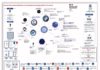
Embedded systems have become the unsung heroes of modern technology. They power our satellites, medical devices, vehicles, and industrial infrastructures, quietly operating at the intersection of the physical and digital worlds. But as these systems grow more interconnected, they also become more exposed to increasingly sophisticated cyber threats.
To address this challenge, MITRE has released a new framework: the Embedded Systems Threat Matrix (ESTM). Building on the success of ATT&CK and other MITRE knowledge bases, ESTM brings a much‑needed structure to understanding adversarial behaviors targeting embedded and cyber‑physical environments.
This article provides a concise and accessible introduction to MITRE ESTM, exploring its purpose, structure, and innovation. It also opens the door to future discussions on how this framework could reshape embedded security practices, from industrial control to space systems.
A New Chapter in Embedded Systems Security

Over the past decade, embedded systems have quietly become the invisible backbone of our daily lives. From cars that can park themselves to satellites orbiting Earth, from medical devices monitoring our health to industrial controllers powering entire cities, embedded technologies are everywhere. Yet, as their intelligence and connectivity have grown, so too has their exposure to sophisticated cyber threats.
Until recently, defenders lacked a dedicated framework to understand and categorize these threats in a structured way. The MITRE ATT&CK framework offered a powerful approach for enterprise IT and cloud environments, but its coverage stopped short at the hardware–firmware boundary. Recognizing this gap, MITRE recently unveiled the Embedded Systems Threat Matrix (ESTM), a new framework designed specifically to map the tactics and techniques attackers use against embedded systems.
ESTM marks a strategic evolution in the way we think about cyber defense. It brings together insights from both the hardware and software worlds, helping engineers, analysts, and security architects speak a common language when assessing risks to embedded or mission-critical systems. In doing so, it opens the door to more coherent, system-wide protection strategies at a time when the digital and physical domains are more intertwined than ever.
Why Embedded Systems Need Their Own Threat Framework
Cybersecurity frameworks have matured significantly over the years, guiding organizations in understanding, detecting, and responding to threats targeting IT and cloud infrastructures. Yet, when it comes to embedded systems, these same frameworks fall short. The problem isn’t the intent, it’s the context. Embedded systems operate under constraints and architectures that differ fundamentally from laptops, servers, or virtual machines.
Many of these systems run on specialized hardware, often with proprietary firmware and limited computational resources. They’re built to last decades, not years, which means they frequently outlive the technologies and security controls that once protected them. Updating or patching them can be complex or even impossible, especially when they’re deployed in satellites, industrial control systems, or medical environments.
Beyond technical challenges, there’s also a difference in threat behavior. Attackers targeting embedded environments may exploit physical access, real-time communication protocols, or even electromagnetic emissions, vectors rarely considered in traditional cybersecurity models. These nuanced attack surfaces require a framework that can reflect both digital and physical realities.
This is precisely where the MITRE Embedded Systems Threat Matrix (ESTM) steps in. It recognizes that embedded systems inhabit a hybrid world, where bits and circuits coexist, and where compromise can have tangible, real-world consequences. By providing a dedicated structure for mapping these threats, ESTM enables organizations to anticipate, analyze, and mitigate attacks that traditional IT frameworks were never designed to handle.
Overview of the MITRE ESTM Framework
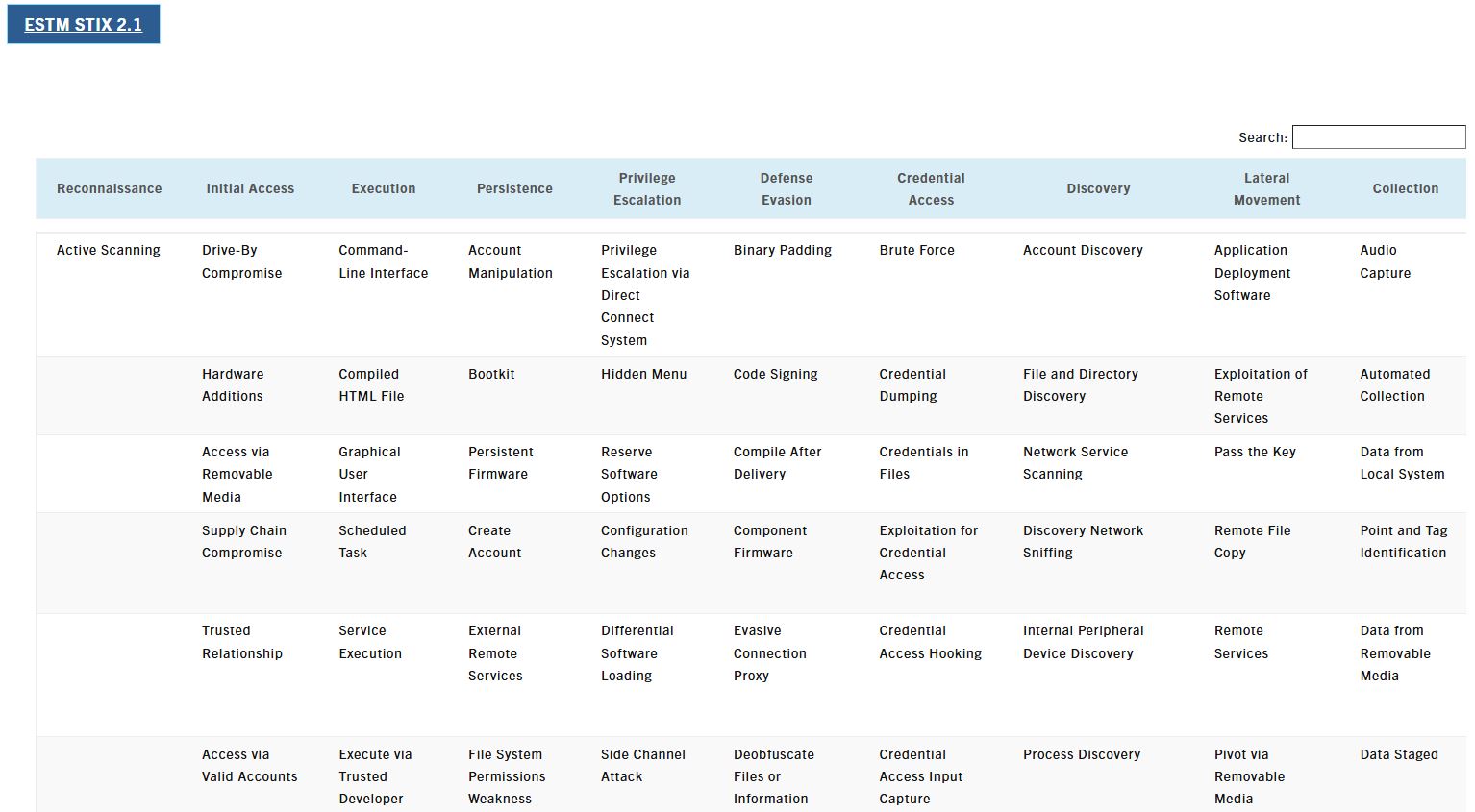
The MITRE Embedded Systems Threat Matrix (ESTM) was developed to provide a clear, structured way to describe how adversaries target and exploit embedded systems. It follows the same philosophy that made MITRE ATT&CK so influential, a knowledge base of adversarial behaviors organized by tactics and techniques, but adapts it to the unique realities of embedded architectures.
At its core, ESTM lays out the tactics, the high-level adversarial goals, and the techniques attackers might use to achieve them within an embedded context. These tactics reflect the entire attack lifecycle, from gaining access to maintaining persistence or disrupting functionality. What makes ESTM distinctive is its attention to embedded-specific aspects: hardware manipulation, firmware compromise, supply chain interference, and even impacts on safety-critical operations.
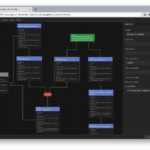
The framework organizes these behaviors in a matrix format, helping analysts visualize how attacks evolve across multiple layers of a system, from sensors and controllers to communication buses and firmware. This visual model not only supports post-incident analysis but also aids system designers in anticipating and preventing potential weaknesses during development.
Like MITRE’s other frameworks, ESTM is meant to be dynamic and collaborative. MITRE encourages researchers, integrators, and industry partners to contribute new techniques and examples as threats evolve. In that sense, ESTM is more than a static reference, it’s a living framework designed to grow alongside the technologies it aims to protect.
Key Features and Innovations of MITRE ESTM
What sets the MITRE Embedded Systems Threat Matrix apart is its deep alignment with the physical realities of embedded technologies. Unlike traditional cybersecurity models that focus primarily on software exploitation, ESTM expands the lens to include hardware, firmware, and the often-overlooked interfaces that connect the two. This holistic approach gives defenders a more accurate picture of how threats materialize and propagate in complex embedded environments.
One of ESTM’s most notable features is its ability to map attacks that span multiple domains, for example, an adversary injecting malicious firmware during manufacturing, then exploiting communication protocols once the system is deployed. Such cross-domain visibility is essential for industries like aerospace, automotive, and industrial control, where embedded systems are tightly integrated into broader operational networks.
Another innovation lies in the framework’s hardware-aware tactics. ESTM covers areas such as physical tampering, fault injection, and firmware modification, attack vectors that rarely appear in IT-oriented matrices. By including these dimensions, the framework bridges the gap between traditional cyber threat modeling and hardware-level security analysis.
MITRE has also designed ESTM to complement existing frameworks like ATT&CK and D3FEND. This interoperability means defenders can link embedded-specific techniques to established detection, mitigation, and response strategies. The result is a more coherent defense ecosystem, where insights from the digital and physical layers reinforce one another.
Ultimately, ESTM is not just a new taxonomy, it’s a unifying language for diverse teams. By helping engineers, researchers, and analysts describe threats in consistent terms, it accelerates collaboration and enables proactive design choices that make embedded systems more resilient from the start.
How Organizations Can Use ESTM
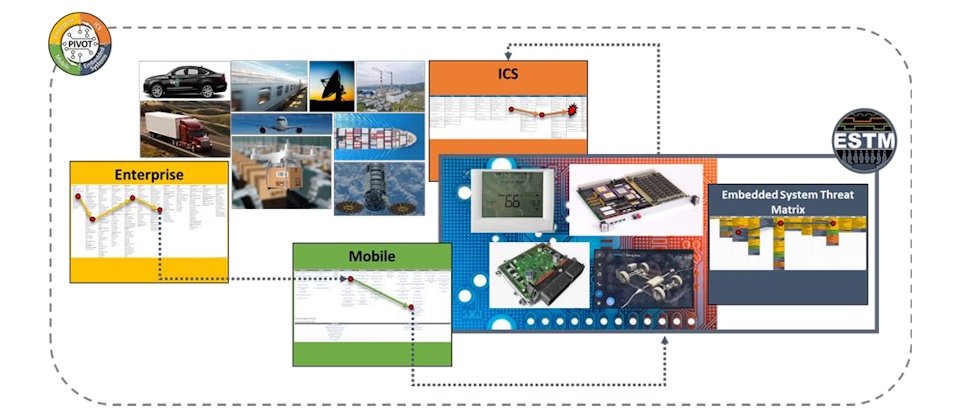
For many organizations, the challenge with embedded security isn’t just identifying vulnerabilities, it’s understanding how they fit into the bigger picture of system risk. The MITRE Embedded Systems Threat Matrix (ESTM) offers a structured way to bridge that gap. By modeling potential attacker behaviors rather than isolated weaknesses, ESTM helps teams move from reactive patching to proactive defense planning.
In practice, ESTM can serve multiple roles. Security architects can integrate it into the early stages of system design to evaluate how different components, processors, controllers, communication modules, might be targeted. Red teams and penetration testers can use the matrix as a roadmap to craft realistic attack scenarios that reflect how real adversaries operate in embedded environments. Meanwhile, defenders can use the same framework to prioritize mitigations based on which tactics are most relevant to their architecture or industry.
ESTM also supports regulatory compliance and internal assurance. As industries such as automotive, aerospace, and energy adopt stricter cybersecurity standards, mapping system threats to an established framework provides traceable evidence of due diligence. The structured language of ESTM also helps align security discussions between engineering, compliance, and incident response teams, a critical step in achieving true “secure-by-design” outcomes.
Finally, the framework can be a powerful educational tool. By visualizing how complex attacks unfold across the hardware–software boundary, it helps professionals from different backgrounds, network security, embedded engineering, operations, build a shared understanding of emerging risks. This shared perspective is crucial as embedded systems increasingly underpin the world’s most critical infrastructures.
MITRE ESTM vs. Other Frameworks (Opening Future Comparisons)
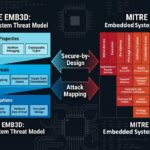
The release of the MITRE Embedded Systems Threat Matrix (ESTM) doesn’t exist in a vacuum. It joins a growing ecosystem of frameworks that help researchers and engineers better understand how adversaries target highly specialized systems. Among these, MITRE’s EMB3D and The Aerospace Corporation’s SPARTA framework stand out as strong points of comparison.
While the EMB3D knowledge base focuses on cataloging vulnerabilities and attack patterns specific to embedded devices, ESTM takes a broader, behavior‑driven approach. It maps the tactics and techniques adversaries use across the full attack lifecycle, offering a perspective that goes beyond known vulnerabilities to capture attacker intent and methodology. In this sense, EMB3D and ESTM are complementary: one documents what can be exploited, while the other explains how and why these exploits may occur.
The SPARTA framework (Space Attack Research and Tactic Analysis) developed by The Aerospace Corporation provides another valuable point of alignment. SPARTA is focused on space‑system resilience, offering a structured method to model, visualize, and analyze attacks against satellites and ground segments. ESTM’s methodology could integrate naturally with SPARTA’s domain‑specific modeling by providing detailed embedded‑level insights, especially for spacecraft subsystems, mission processors, and communication interfaces.
Together, frameworks like ESTM, EMB3D, and SPARTA suggest a promising path toward more unified and cross‑domain threat modeling. By connecting embedded‑system and space‑system perspectives, cybersecurity professionals can better anticipate how adversarial behavior spans from microcontrollers on Earth to mission architectures in orbit.
Future Research Directions and Case Study Ideas
As with many of MITRE’s frameworks, the real value of the Embedded Systems Threat Matrix will emerge through community adoption and experimentation. Researchers, engineers, and analysts have a unique opportunity to apply ESTM to real-world scenarios, uncovering new insights into how embedded systems can be better protected. The framework’s adaptable structure lends itself perfectly to comparative and exploratory studies.
One promising avenue would be a detailed analysis of the Thales satellite hacking demonstration at CYSAT 2023, this time interpreted through the lens of the ESTM framework. Mapping each step of the simulated intrusion, from access to payload execution, against ESTM’s tactics could help illustrate how attackers might compromise spaceborne embedded systems and what defensive gaps remain.
Another study could revisit the infamous Stuxnet incident, applying ESTM to model the techniques used against Siemens PLCs. This exercise would not only highlight how early campaigns against industrial control systems anticipated modern embedded attack vectors, but also show how frameworks like ESTM could have helped identify weak points earlier in the system lifecycle.
Finally, industrial control and automation environments present an ideal testing ground for ESTM-driven modeling. Using the framework to visualize attacks on programmable logic controllers (PLCs) or distributed control networks could guide both defensive engineering and cybersecurity training initiatives.
These case studies would do more than validate the framework, they would help shape its evolution. Each analysis could contribute new examples, refine existing categories, or inspire sector-specific adaptations. In this way, ESTM becomes not just a tool for documentation, but a catalyst for collaborative research and continuous improvement in embedded security.
Conclusion : Towards a Unified Threat Modeling Paradigm for Embedded Systems
The release of the MITRE Embedded Systems Threat Matrix (ESTM) marks an important milestone in the evolution of cybersecurity. It extends structured threat intelligence into a realm that has long operated at the margins of traditional IT defense, the domain of firmware, sensors, processors, and critical control loops. By offering a shared vocabulary and methodology, ESTM helps bridge the gap between embedded design and cybersecurity analysis.
More than a reference, the framework invites collaboration. Its greatest strength lies in its capacity to grow, to absorb lessons from real-world incidents, research initiatives, and the practical experiences of engineers and defenders. As industries increasingly depend on embedded technologies to operate safely and efficiently, the need for a unified approach to threat modeling becomes not just desirable but essential.
Whether applied to satellites, industrial automation, connected vehicles, or future cyber-physical systems, ESTM represents a step toward that unity. It offers the foundation for a future where embedded security is no longer reactive, isolated, or opaque, but instead integrated, transparent, and continuously improved through global knowledge sharing.
In that sense, MITRE ESTM is more than just a framework; it is an open invitation for the cybersecurity community to build the next generation of protection for the systems that quietly run our world.