dimanche 14 décembre 2025
Accueil Blog Page 4

Viasat Attack: A Space Cyber Attack Post Mortem Investigation

1

Introduction

In this paper, I choose to investigate the Viasat cyber attack that occurred on 24 February, 2022. First, I will summarize the chronology of events (Chapter 1). Then, I will try to critique the organization’s response to the cyber attack (Chapter 2). After that, I will suggest additional steps that could have been taken to further mitigate the impact moving forward (Chapter 3). Finally, I will think about what the attacked organization could have done beforehand to prevent the attack (Chapter 4).

Disclaimer, details and references

To do this analysis of the Viasat cyber attack, I used 3 articles, documents or papers detailed below:

First, I used the open-source intelligence (1) of the team composed by Nicolò Boschetti (Cornell University), Nathaniel Gordon (Johns Hopkins University) and Gregory Falco (Cornell University). In their open-source intelligence, they reconstructed the lifecycle of the attack. They specified that however, without first-hand knowledge of ViaSat’s systems, they cannot be certain about their hypothesis.

Viasat’s statement (2) on Wednesday, March 30th, 2022 provides a somewhat plausible but incomplete description of the attack. In a statement disseminated to journalists (3), Viasat confirmed the use of the AcidRain wiper in the February 24th attack against their modems.

At the DefCon 31, Mark Colaluca and Nick Saunders from Viasat presented a talk named Defending KA-SAT. During this talk, they argued not to believe everything that you can read on the internet. It’s often simply inaccurate. They told that there is no evidence or proof of the claims. There is no evidence of any compromise or tampering with Viasat modem software or firmware images and no evidence of any supply-chain interference. Regarding, the possibility that wiper-malware was deployed and erased the hard drives of the modems, they answered that modems don’t have hard drives.

1. Summary of chronology of events

The Ukrainian conflict shown the potential and temptation of targeting space assets during an armed conflict between two states. Telecommunications satellites are vital to both national security and the economy. But unfortunately, they are also increasingly vulnerable to cyber-attacks and increasingly targeted by malicious actors.

Regarding the Ukrainian conflict, one example is the cyber-attack on the Viasat satellite company.

The Viasat attack was a cyberattack on American communications company Viasat affecting their KA-SAT network, on 24 February, 2022. Thousands of Viasat modems got hacked by a deliberate cyber event. Thousands of customers in Europe, especially in Ukraine, have been without internet for a month since.

Viasat is an American communications company based in Carlsbad, California, with additional operations across the United States and worldwide. Viasat is a provider of high-speed satellite broadband services and secure networking systems covering military and commercial markets.

This attack began approximately one hour before Russia launched its major invasion of Ukraine. UK and US intelligence assesses that Russia was almost certainly responsible for the attack.

According to Viasat, the attacker used a poorly configured virtual private network appliance to gain access via internet to the trusted management part of the KA-SAT network.

The vulnerability used by the attackers is CVE-2018-13379, corresponding to a vulnerability in the Fortinet firewall discovered in 2019.

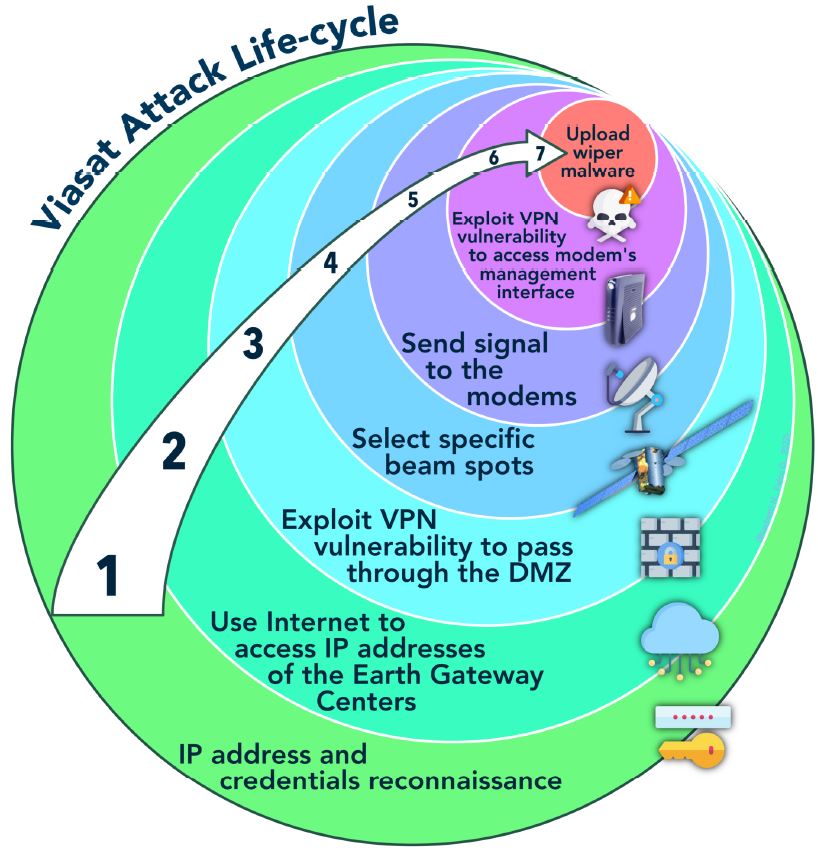
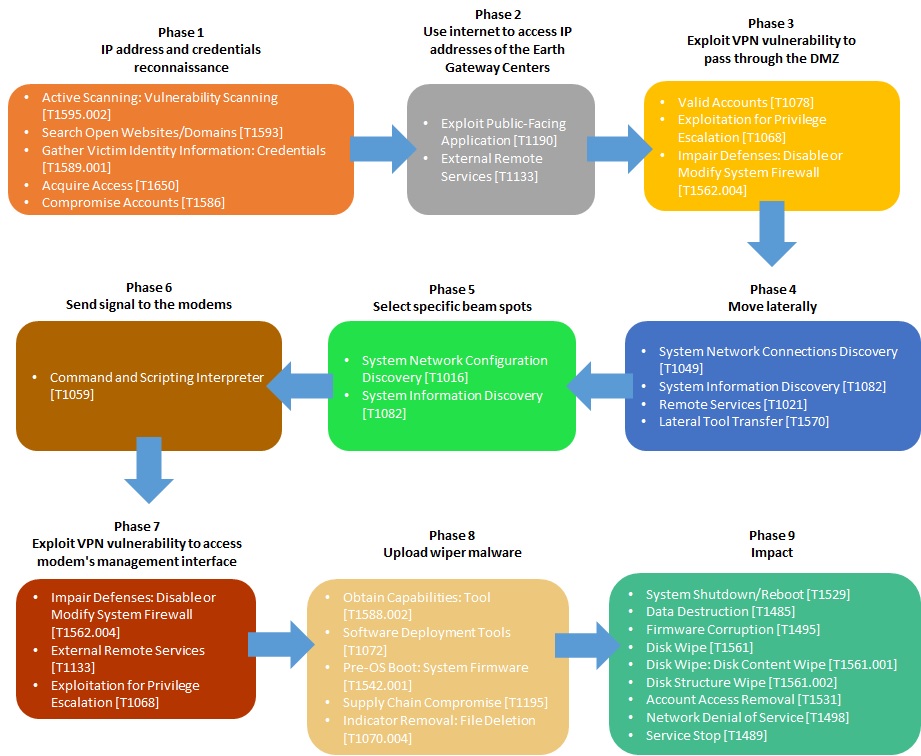
Once on the trusted management segment of the KA-SAT network, the attackers issued commands to select specific beam spots and then signal to the modems.

They overwrote part of the flash memory in modems, making them unable to access the network, but not permanently damaged. The satellite itself and its ground infrastructure were not directly affected.

With their open-source intelligence, the team [1] (Nicolò Boschetti, Nathaniel Gordon and Gregory Falco) schematized the entire attack lifecycle in the diagram below.

Figure 1 : The anatomy of the ViaSat attack broken into seven levels of escalation. From : Nicolò Boschetti (Cornell University) and Gregory Falco (Cornell University) – 2022

2. Criticism of the organization’s response to the cyber attack

ViaSat seems to be a company with dual-use satellites – satellites that can serve both civil and military. Presumably, Viasat was not prepared to be a military target in. I think that dual-use commercial space companies must be aware and prepared to be a military target in.

Viasat also appears to be a geographically dispersed organization. The ground segment of Viasat is called KA-SAT Network. Launched and owned by Eutelsat, the KA-SAT network was acquired by ViaSat in 2020. During the acquisition transition period, the management of the ground segment was still in the hands of the Eutelsat subsidiary Skylogic. Each subsidiary is responsible for different elements of the KA-SAT infrastructure.

This organizational complexity makes challenging to have homogenous security controls and the geographic dispersion of the organizations and their integration through corporate acquisition did not help with the managerial coordination of the attack response. When responding to the attack, there was an apparent lack of coordination of ViaSat, Eutelsat, and Skylogic.

3. Additional suggestions that could have been taken to further mitigate the impact moving forward

As additional steps that I can suggest is the need for an agile and software-enabled strategy to quickly respond to attacks. Indeed, the AcidRain wiper malware resulted in the development of a lot of inoperable modems. Shipping tens of thousands of modems is undoubtedly time-intensive and costly.

Given the critical nature of the satellite communication system, it is unacceptable for such a delay. Viasat need to deploy a better agile response to attack like the possibility to deploy a software update that was developed to restore access for users.

4. What the attacked organization could have done beforehand to prevent the attack

This attack is a concrete example of malicious operations carried out by a group of adversaries during a space-cyber war.

To combat cyber-attacks on space systems, states should adopt national policies to defend against threats to space-based assets and applications. This won’t prevent space-cyber hostilities, but it could provide protections against space-cyber threats.

Verification and Validation before launch are also very important. Space systems, once launched and deployed, are subject to limitations around structural modifications. For example, Terminals, Modems or End User Equipment are not easily replaced or modified.

Viasat should also do penetration testing in order to test robustness before deploying their equipment. They also need to ensure there equipment are hardening as the good security level.

Viasat need to do threat modelling for Space Systems. Threat modelling plays a crucial role in risk mitigation. Threat modelling helps to identify the security requirements of a system or process and is far more cost-effective than reacting to a breach or attack

Viasat need also to do security risk analysis. Risk analysis allows to identify risk and their likelihood and impact on a system. Risk analysis allows also to identify mitigation plan to reduce risks.

Viasat as satellite providers must be concerned about its supply chains and vendor ecosystems. Given the critical nature of the satellite communication system, Viasat need to monitor its supply chain. Supply chain has been identify by ENISA, the European Union Agency for Cybersecurity, as the mainly attack threat vector in 2021. Viasat should engage in supply chain security best practices such as conducting extensive vendor cybersecurity evaluations.

Finally, Viasat should establish a strong patch management program in order to maintain a regular security update.

Main References

Detecting Aircraft Spoofing With Fly-Catcher

0

Aviation technology is vulnerable to a wide range of cyber threats. Hackers can easily spoof « ghost » aircraft into the sky.

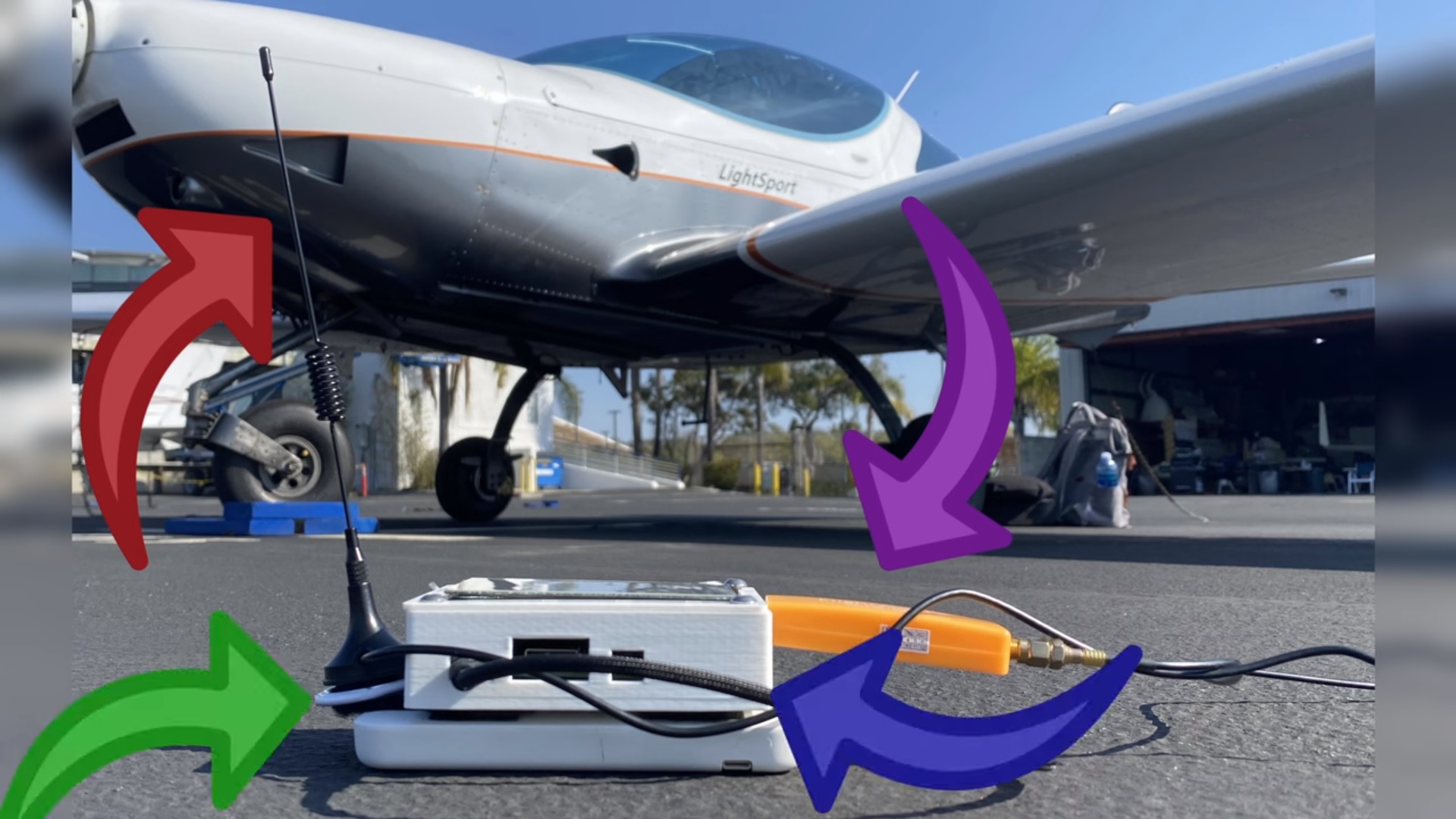
In order to tackle this issue, Angelina Tsuboi, a pilot and a cybersecurity researcher developed a device called Fly Catcher to detect instances of aircraft spoofing on ADS-B. She also flew it on a plane over the coast of Los Angeles.

Fly Catcher monitors the ADS-B 1090MHz frequency to detect spoofed aircraft by ground-based hackers using a custom AI model and neural network.

The device consists of a 1090MHz antenna, FlightAware SDR, a custom 3D chassis and a Raspberry Pi, and scans nearby ADS-B messages and runs them through a neural network to detect fake aircraft transmitted by bad actors.

You can check out the project GitHub here.

You can also read the project article on Medium here.

Watch Fly Catcher in action on YouTube

Angelina’s Website: https://www.angelinatsuboi.net/
The Interstellar Integrity (i2) magazine interviewed me about my passion for space and cybersecurity

0

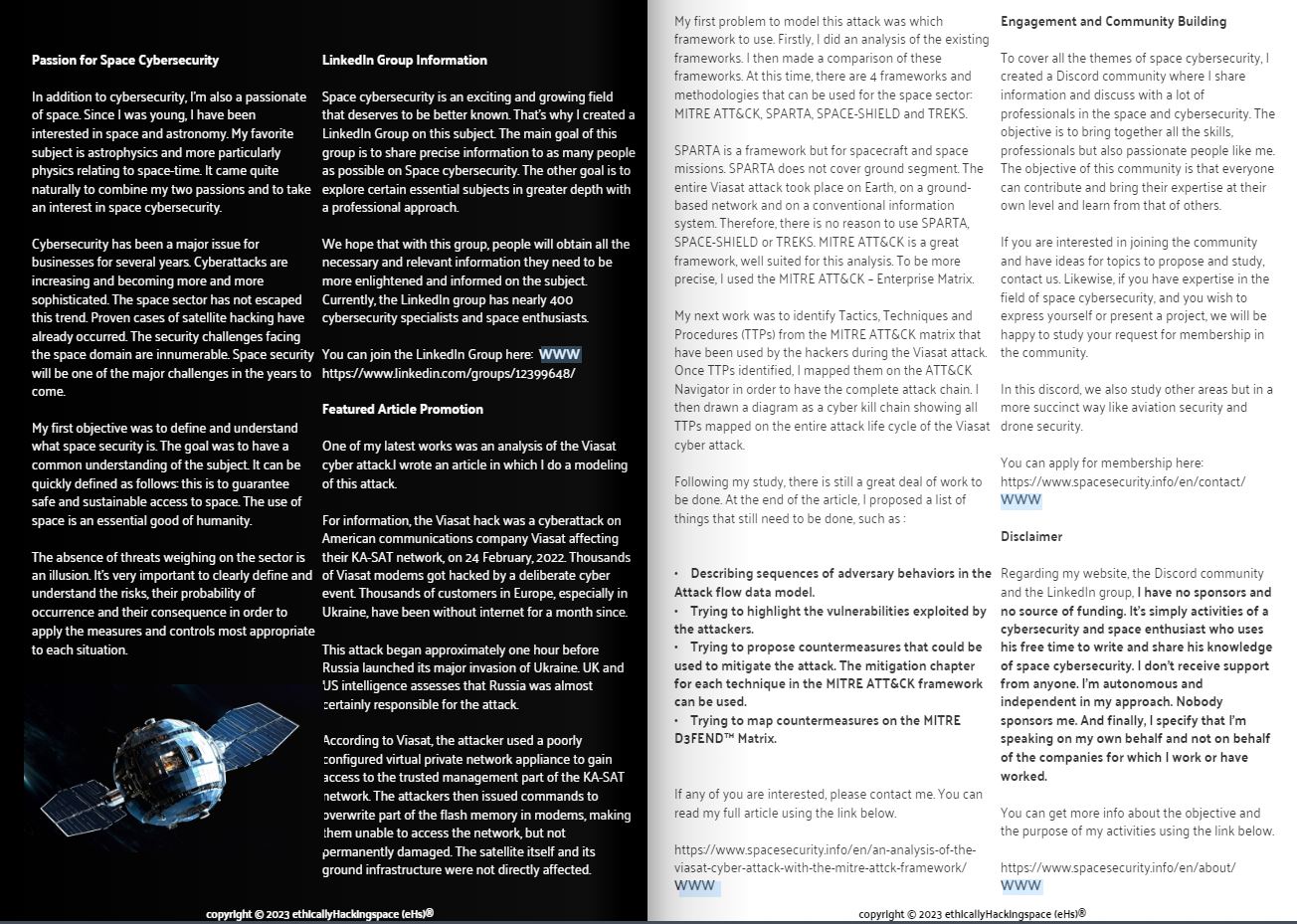
I’m very proud to be featured in the second edition (nov 2023) of Interstellar Integrity (i2) released by ethicallyHackingspace(eHs)®.

Thank’s to William Ferguson for this interview :

  • I introduce myself and my personal background
  • I explain my passion for space and cybersecurity
  • I explain my work about the analysis of the Viasat Cyber Attack with the MITRE ATT&CK Framework (MITRE)
  • I describe my engagement and how I built the best community on LinkedIn and Discord for space and cybersecurit

An excerpt of the Interstellar Integrity (i2) – second edition (nov 2023)

I’m very proud to be featured alongside the following space cybersecurity professionals:

Full issue of the Interstellar Integrity (i2) – second edition (nov 2023)

In this issue, you can also check Data Space with SpaceGPT.

More informations

  • You can read the full issue of the second edition of Interstellar Integrity (i2) here.
  • You can read my article about the analysis of the Viasat cyber attack with the MITRE ATT&CK framework here.
  • You can join my LinkedIn group about Space Cybersecurity Community here.

L’Aéro Recrute, un nouveau programme dont je suis Ambassadeur : Pour mettre en avant la filière de l’Aéronautique, du Spatiale, de la Défense et de la Sécurité

1

Je suis fier de rejoindre le programme L’Aéro Recrute. Je suis nommé Ambassadeur pour la filière Aéronautique et Spatiale.

A ce titre, vous pouvez me contacter via mon profil Ambassadeur sur My Job Glasses afin d’échanger avec moi.

L’aéronautique et le spatial sont à l’aube de plusieurs révolutions. Pour relever ces défis environnementaux et technologiques, L’AÉRO RECRUTE.

Notre filière est spécialisée dans l’étude, le développement, la réalisation, la commercialisation et la maintenance de tous programmes et matériels aéronautiques et spatiaux, civils et militaires, ainsi que de systèmes de défense et de sécurité.

De l’ingénierie à la production, en passant par la maintenance, plus de 25 000 recrutements sont prévus en 2023 partout en France, tendance qui devrait se confirmer les prochaines années.

Talents de tous horizons, du CAP au Bac+8, ouvrez-vous à de nouvelles opportunités dans des métiers de pointe et de passion où l’innovation est partout.

Pour en savoir plus sur L’ Aéro Recrute

My work about the Viasat attack analysis featured in the SIGN.MEDIA #2 newsletter

0

I’m very proud to be featured by Olga Nasibullina and Tatiana Skydan in THE SIGN.MEDIA #2 newsletter.

Olga Nasibullina works mainly on cybersecurity workforce development, government relationships, cyber diplomacy and space cybersecurity.

Tatiana Skydan is the founder of the Podcast Bar & co-founder of The SIGN media.

Tatiana and Olga mentionned my work about the Viasat attack analysis:

  • I compared the 4 frameworks that can be used for the space sector: MITRE ATT&CK, SPARTA, SPACE-SHIELD and TREKS.
  • I explain why I choose the MITRE ATT&CK Framework
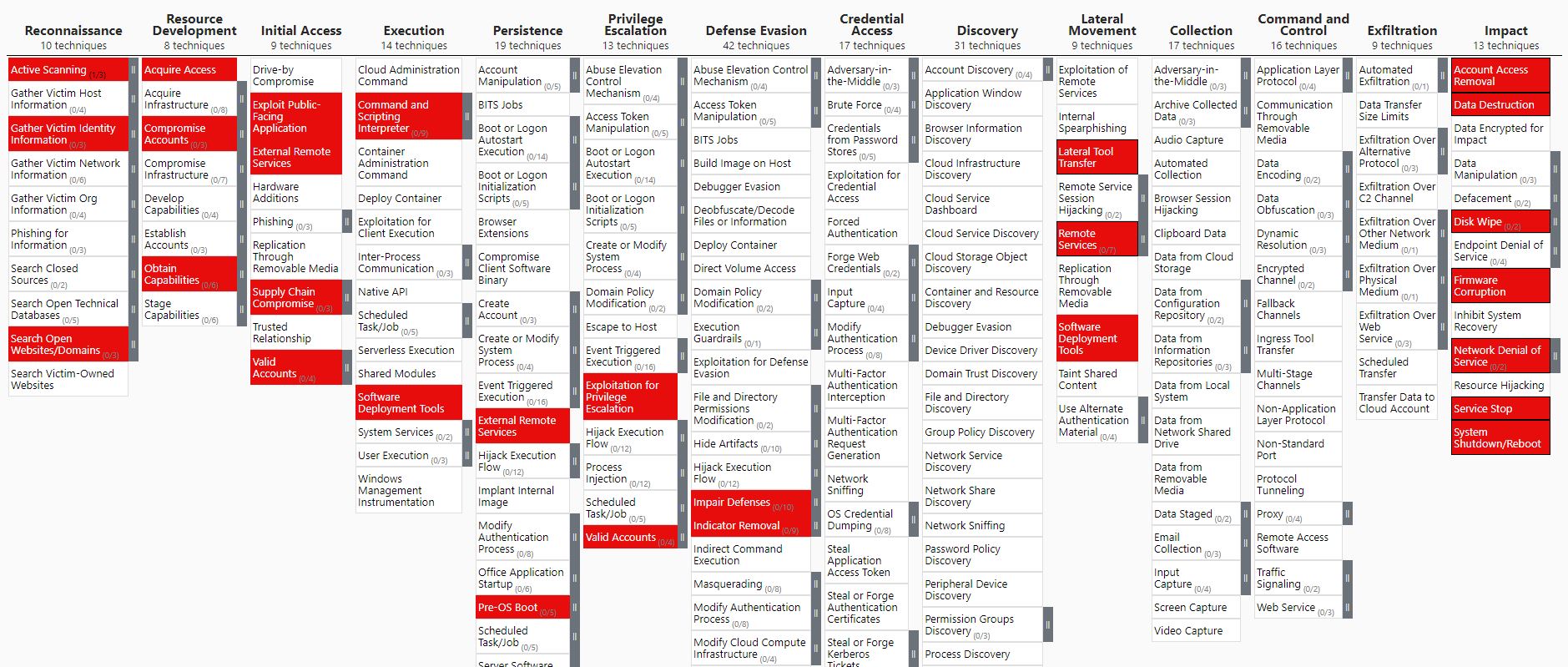
  • I identified Tactics, Techniques and Procedures (TTPs) from the MITRE ATT&CK matrix that have been used by the hackers
  • I mapped them on the MITRE ATT&CK Navigator in order to have the complete attack chain.

  • I drawn a diagram as a Cyber Kill Chain showing all TTPs mapped on the entire attack life cycle of the Viasat cyber attack.

Thank’s again to Tatiana and Olga to have referenced my work in their THE SIGN’s newsletter.

To know more

Some very funny memes on space security

0

Below, I show some very funny memes on space security I created. Do not hesitate to download them and to share them.

SpaceSec, the Workshop on the Security of Space and Satellite Systems

0

SpaceSec is the Workshop on the Security of Space and Satellite Systems
https://spacesec.info/

SpaceSec 2023 took place on the 27 February 2023 in San Diego, California.
https://www.ndss-symposium.org/ndss-program/spacesec-2023/

The videos of the 2023 edition of the SpaceSec workshop have recently been uploaded, and you can view them for free and get an overview of current space security research topics! Also, in case you missed the excellent keynote by James Pavur this is your chance to view it again, where he gave us an extensive overview of open research topics.

All SpaceSec 2023 videos are avalaible here.

SpaceSec will be co-located with the Network and Distributed System Security Symposium (NDSS) in San Diego on March 1, 2024.

You can space submit your security research project.
They will have two deadlines:
– December 7, 2023
– January 12, 2024.

They accept 4-page and 8-page papers on all aspects of space security. This is the perfect opportunity to publish your insights, vetted by a rigorous peer review of academic experts on the subject.

They are accepting papers from an extensive spectrum of space security topics, including space system security, networks and communication security, privacy and usability of space systems, and space security strategies.

My work about the Viasat attack analysis featured at the BSIDES St. Louis 2023 hacking education conference

0

I’m very proud to be featured by Tim Fowler in his presentation at BSIDES St. Louis 2023 hacking education conference. Tim Fowler is an offensive security analyst at Black Hills Information Security.

Tim mentionned my work about the Viasat attack analysis:

  • I compared the 4 frameworks that can be used for the space sector: MITRE ATT&CK, SPARTA, SPACE-SHIELD and TREKS.
  • I explain why I choose the MITRE ATT&CK Framework
  • I identified Tactics, Techniques and Procedures (TTPs) from the MITRE ATT&CK matrix that have been used by the hackers
  • I mapped them on the MITRE ATT&CK Navigator in order to have the complete attack chain.

  • I drawn a diagram as a Cyber Kill Chain showing all TTPs mapped on the entire attack life cycle of the Viasat cyber attack.

Thank’s again to Tim Fowler to have referenced my work in his talk at BSIDES St. Louis.

BSIDES St. Louis 2023 is a hacking education conference that took place on Oct 14, 2023 at St. Charles Community College in Missouri state (United States).

The presentation of Tim Fowler is called: A brief introduction to cybersecurity in Space; The Past, Present, & Future.

To know more

DroneSec, a private intelligence agency for drone threats, that provides UAS Threat Intelligence and drone security training

0

DroneSec is a private intelligence agency for drone threats. DroneSec provides drone threat intelligence solutions to protect people and drones from malicious drones and people.

DroneSec provides the Notify UAS Threat Intelligence Platform for real-time visibility of drone threats. DroneSec solutions allow to put organizations 10 steps ahead of the threat.

DroneSec are pioneers in UAS Threat Intelligence. Their leading intelligence subscription service provides organizations with the latest emerging trends, threat actor TTPs, technology types and component analysis.

Drone Threat Intelligence Platform (DTIP)

DroneSec provides also drone security and C-UAS training. Their courses have helped train organisations in offensive and defensive drone operations.

DroneSec Courses and training

Find below the Featured Courses. This includes three courses : Drone Security Fundamentals, Regulations and SECOPS. These three courses can be taken individually, or together as a bundle (recommended) to achieve certification.

The DROSINT and C-UAS Site Vulnerability courses can be taken only individually.

Our readers can get the following discount code for 10% off the course fees : SPACESECURITY

Drone Security Fundamentals

Participants will come away with a comprehensive understanding of:

  • Drones, Counter-Drone and UTM Systems
  • Current and future threat vectors and risk surface
  • Various case studies, methodologies and threat modelling techniques

Drone Security Regulations

Participants will come away with a comprehensive understanding of:

  • Drones, Counter-Drone and UTM system legal requirements
  • Problems, Case Studies and Precedents within the Industry
  • Current and future regulatory requirements and considerations

Drone SecOps: Offense & Defense

Participants will come away with a comprehensive understanding of:

  • Security Risks and Attack Vectors within the Drone Industry
  • Cyber, Physical and Kinetic Security Vectors
  • Responding to, Simulating and Preparing for Intrusions

Beginner to Advanced: Drone Security Bundle

This bundle courses cover the entire drone ecosystem. Fundamental drone security concepts, counter-drone essentials and actionable playbooks based on threat-intelligence, and DroneSec case studies are included.

DroneSec Conferences

The State of Drone Security: Analysing 1000+ drone incidents – Mike Monnik (DroneSec) GDSN #2

Global Drone Security Network #2

AAUS RPAS in Australian Skies 2022 – Unique Trends in the Malicious use of RPAS

To know more

MITRE realeased ATT&CK v14 with improvements to Detections, ICS, Mobile

0

🔥 On 31 October 2023, the MITRE Corporation realeased ATT&CK v14, the new version of its framework.

This new version includes significant improvements to Detections, ICS, Mobile.

In this article, we summarize the biggest changes : and will go through more details.

🔥 Find below the Key Highlights of ATT&CK v14

👉 ATT&CK Version 14 contains 760 Pieces of Software, 143 Groups, and 24 Campaigns. Broken out by domain:

  • ✔️ Enterprise: 201 Techniques, 424 Sub-Techniques, 141 Groups, 648 Pieces of Software, 23 Campaigns, 43 Mitigations, and 109 Data Sources
  • ✔️ Mobile: 72 Techniques, 42 Sub-Techniques, 8 Groups, 108 Pieces of Software, 1 Campaign, 12 Mitigations, and 15 Data Sources
  • ✔️ ICS: 81 Techniques, 13 Groups, 21 Pieces of Software, 52 Mitigations, 3 Campaigns, 14 Assets, and 34 Data Sources

👉 ATT&CK v14 features 14 inaugural Assets (Assets represent the devices and systems commonly found within Industrial Control System environments), representing the primary functional components of the systems associated with the ICS domain. These Asset pages include in-depth definitions, meticulous mappings to techniques, and a list of related Assets.

🔥 MITRE has published a blog post detailing some of the major updates in ATT&CK v14, as well as release notes listing new techniques and version changes. A detailed changelog is also available.

More about MITRE ATT&CK framework

The MITRE ATT&CK framework is a globally recognized knowledge base and methodology for understanding, organizing, and classifying cyber threats and tactics used by adversaries during different stages of a cyber attack. ATT&CK stands for Adversarial Tactics, Techniques, and Common Knowledge.

The framework was developed by MITRE, a not-for-profit organization that operates federally funded research and development centers (FFRDCs) to address various challenges faced by the U.S. government. However, the framework has gained widespread adoption in the cybersecurity community and is used by organizations around the world.

The MITRE ATT&CK framework provides a comprehensive model that describes the entire lifecycle of a cyber attack, from initial reconnaissance and weaponization to lateral movement, data exfiltration, and impact. It consists of a matrix that outlines various tactics and techniques employed by adversaries, along with information on the platforms they target (e.g., Windows, macOS, Linux) and the types of software they use.

The framework is organized into several categories, including Initial Access, Execution, Persistence, Privilege Escalation, Defense Evasion, Credential Access, Discovery, Lateral Movement, Collection, Exfiltration, and Impact. Each category is further divided into specific techniques and sub-techniques that adversaries may employ.

For each technique, the framework provides detailed information on how it works, the potential impact, and real-world examples of its usage by known threat actors. This knowledge base allows organizations to better understand the tactics and techniques employed by adversaries and assists in building effective defensive strategies and improving incident response capabilities.

By utilizing the MITRE ATT&CK framework, organizations can map observed adversary behaviors to specific techniques, identify security gaps, prioritize defenses, develop threat intelligence, and share information with the broader cybersecurity community. The framework serves as a common language and reference point for cybersecurity professionals, enabling them to collaborate and exchange knowledge on emerging threats and effective defense strategies.

Overall, the MITRE ATT&CK framework plays a crucial role in enhancing cybersecurity awareness and readiness, facilitating the development of proactive defense measures, and improving the overall resilience of organizations against cyber attacks.

Go to the MITRE ATT&CK framework here.

Derniers articles

2nd International Conference on Gravitation, Astrophysics and Cosmology (ICGAC2026) – April 16-18, 2026 in...

0
We are pleased to announce that the 2nd International Conference on Gravitation, Astrophysics and Cosmology (ICGAC2026) will be held on April 16-18, 2026, in...

Two big announcements : the release of SPARTA v3.1 with MITRE’s EMB3D mapping and...

0
In the following article, discover the major advancements announced with the release of SPARTA v3.1: the addition of new NIST space segment guidance, the...

An analysis of the Thales satellite hacking demo at CYSAT 2023 with the METEORSTORM™...

0
Disclaimer Please be informed that the analysis detailed in this article is entirely separate from the hacking experiment conducted by the Thales team on the...

Exploring the power of the METEORSTORM™ framework — a framework built for full-spectrum modeling...

1
I'm very proud to have successfully taken up a new challenge exam in beta version about METEORSTORM™ framework which allowed me to obtain the...

An analysis of the Thales satellite hacking demo at CYSAT 2023 with the MITRE...

1
Disclaimer Please be informed that the analysis detailed in this article is entirely separate from the hacking experiment conducted by the Thales team on the...

Articles les plus lus

Cartographie des acteurs étatiques du cyber en France

0
Avec l'aimable autorisation de Martial Le Guédard, nous reproduisons ci-dessous sa cartographie au sujet des différents acteurs étatiques évoluant dans le domaine du Cyber...

Cartographie des services spécialisés de la communauté du renseignement (1er et 2ème cercle)

0
L'illustration ci-dessous est une carte heuristique qui présente les services spécialisés de la communauté du renseignement du 1er cercle. Cette cartographie est mise à...

Qu’est-ce que le grand Commandement De l’Espace (CDE) créé par la France pour la...

2
Le Commandement De l’Espace (CDE) a été créé par arrêté le 3 septembre 2019. Il succède au Commandement interarmées de l’espace (CIE). Il rassemble...

Cartographie des acteurs français et européens de la cybersécurité satellitaire et spatiale

1
La France est leader de la politique spatiale en Europe. Elle met en oeuvre des projets innovants et performants avec en permanence de nouveaux...

Etude sur la cybersécurité des systèmes spatiaux : menaces, vulnérabilités et risques

4
A la différence des attaques électroniques qui interférent avec la transmission des signaux de Radio Fréquence, les cyberattaques visent quant à elles, les données...

Popular posts

Cartographie des acteurs étatiques du cyber en France

0
Avec l'aimable autorisation de Martial Le Guédard, nous reproduisons ci-dessous sa cartographie au sujet des différents acteurs étatiques évoluant dans le domaine du Cyber...

Cartographie des services spécialisés de la communauté du renseignement (1er et 2ème cercle)

0
L'illustration ci-dessous est une carte heuristique qui présente les services spécialisés de la communauté du renseignement du 1er cercle. Cette cartographie est mise à...

Qu’est-ce que le grand Commandement De l’Espace (CDE) créé par la France pour la...

2
Le Commandement De l’Espace (CDE) a été créé par arrêté le 3 septembre 2019. Il succède au Commandement interarmées de l’espace (CIE). Il rassemble...

Cartographie des acteurs français et européens de la cybersécurité satellitaire et spatiale

1
La France est leader de la politique spatiale en Europe. Elle met en oeuvre des projets innovants et performants avec en permanence de nouveaux...

Etude sur la cybersécurité des systèmes spatiaux : menaces, vulnérabilités et risques

4
A la différence des attaques électroniques qui interférent avec la transmission des signaux de Radio Fréquence, les cyberattaques visent quant à elles, les données...