dimanche 14 décembre 2025
Accueil Blog Page 10

Space Cyber Security Watch N°4 (June 14, 2021)

0


PDF VERSION IS AVALAIBLE HERE

Find below the new Space Cyber Security Watch N°4 (June 14, 2021). In this paper, you will find everything that has caught our attention since the last time : news, articles, papers, Space CTI, videos, webinars, events, attacks, podcats … This work is not exhaustive, so comments and observations are welcome.
Contents

Articles

May 2021

June 2021

  • (EN) House bill would designate space as critical infrastructure. Let’s do this! Space needs to be designated Critical Infrastructure
  • (EN) General Atomics Partners with Space Development Agency to Conduct Space-to-Air Optical Communication Experiment. SDA and General Atomics have expanded the Laser Interconnect and Networking Communication System (LINCS) program to include space-to-air optical communication demonstrations. SDA and GA will now establish and evaluate links between space and an airborne MQ-9 Reaper, in addition to the planned space-to-space and space-to-ground activities. This experiment leads to a fight where airborne assets can fly without relying on radio frequency, providing Low Probability of Intercept/Low Probability of Detection and increasing capabilities for warfighters around the world!
  • (EN) SDA & DARPA: June Demos To Prove Optical Sat Link Capability. « Getting a laser beam on a spacecraft to point to a laser receiver on another spacecraft accurately enough with the right power levels, the right waveforms, etc.,– it’s not an easy thing, » said General Atomics VP Nick Bucci.
  • (EN) General Atomics to Demo SDA Space-to-Air Optical Communication. General Atomics‘ electromagnetic systems group has received a contract to demonstrate optical communication between a low-Earth orbit satellite and an unmanned aerial vehicle for the Space Development Agency.
  • (EN) SpaceChain Sends Ethereum Cryptocurrency Tech into Space. SpaceChain has successfully sent a blockchain-enabled payload into space on Thursday aboard a SpaceX Falcon 9 rocket launched from NASA‘s Kennedy Space Center.
  • (EN) US Military Places a Bet on LEO for Space Security. U.S. Defense Department agencies are working with a who’s-who of military contractors, commercial satellite operators, and technology companies to finally demonstrate the feasibility of a proliferated constellation of satellites in Low-Earth Orbit (LEO).
  • (EN) Hacking space: How to pwn a satellite. Hacking an orbiting satellite is not light years away – here’s how things can go wrong in outer space
  • (EN) Momentus Reaches National Security Agreement, Co-Founders Divest from Company. Momentus has made a concrete step forward with a after a turbulent few months dealing with U.S. national security concerns with the business. The in-space transportation company announced Wednesday that it has signed a National Security Agreement (NSA) with the U.S. Department of Defense and Department of the Treasury on behalf of the Committee on Foreign Investment in the United States (CFIUS).

Papers

  • (EN) Autonomous Cyber Capabilities under International Law : New Book on autonomous cyber capabilities under International Law now available in CCDCOE Library
  • (EN) On Detecting Deception in Space Situational Awareness (James Pavur, Ivan Martinovic). This paper has been accepted for the 16th ACM ASIA Conference on Computer and Communications Security (ACM ASIACCS 2021), 7-11 June 2021, Virtual event. This paper offers one of the first considerations of defense techniques against SSA deceptions. Building on historical precedent and real-world SSA data, they simulate an attack whereby an SSA operator seeks to disguise spy satellites as pieces of debris.
  • (EN) New ESPI Yearbook edition. The Yearbook on Space Policy is an annual publication of the European Space Policy Institute (ESPI). p.93 you can find a small section on GSaaS (Ground Station as a Service).
  • (EN) An overview of protected satellite communications in intelligent age. Our focus is placed on the critical technologies and practical applications, and finally discuss remaining challenges and look forward to the future research directions. It is undoubted that the protected SatCom is one of the most important systems in military communications, both now and in the future.

Videos

  • (EN) Locked Shields 2021. Several Space ISAC members participated in Locked Shields 2021 and threats to space injects were considered because of their involvement. The largest and most complex international live-fire cyber defence exercise in the world, Locked Shields 2021 was organised by NATO Cooperative Cyber Defence Centre of Excellence (CCDCOE) from April 13th to 16th. The exercise included new cyber-physical systems and integrated technical and strategic elements, enabling participating nations to practice the entire chain of command in solving a large-scale a cyber incident. This year was unique from other iterations of Locked Shields in that for the first time the organisers will also be participating remotely rather than gathering in Tallinn as they have done in previous years.
  • (EN) Space Iceland May meeting with Berenike Vollmer, researcher on Cybersecurity Gaps.
  • (EN) CYSAT ’21: C. Beek & E. Carroll « Space 4.0: Another cybercriminal portal? ». Space 4.0 encompasses all recent trends such as GSaaS, SataaS or edge computing making modern satellites (almost) an extension of the cloud!
  • (EN) On Detecting Deception in Space Situational Awareness. Presentation Video from James Pavur (Oxford University) for ACM ASIACCS 2021

Webinars

Podcasts

  • (EN) Mars Goes to Shell. About this Episode : Tim Canham, Mars Helicopter Operations Lead at NASA’s JPL joins us again to share technical details you’ve never heard about the Ingenuity Linux Copter on Mars. And the challenges they had to work around to achieve their five successful flights.
  • (EN) Space Policy Pod: Episode 21 with Sean O’Keefe (Former Administrator, NASA). Given the current real-world challenges confronting all of us, AIAA has joined the MITRE Corporation and the U.S. Chamber of Commerce to produce this podcast series to examine events and ideas affecting the space sector.

Past Events

Upcoming Events

This work is not exhaustive, so comments and observations are welcome.
Space Cyber Security Watch N°3 – 31 May 2021

0

PDF VERSION IS AVALAIBLE HERE

Find below the new Space Cyber Security Watch No 3. In this paper, you will find everything that has caught our attention since the last time : news, articles, papers, Space CTI, videos, webinars, events, attacks, podcats … This work is not exhaustive, so comments and observations are welcome.
Contents

Attacks on Space Systems

Articles

February 2021

  • (EN) Red Flag 21-1 integrates space, cyberspace for joint all-domain operations training – Red Flag 21-1 is an exercise with Space-unit participants including blue, red and white players from the United States Space Force, U.S. Army Space and Missile Defense Command, and allied nations combat air forces. During the exercise, they have employed « space electronic warfare capabilities that support full-spectrum national security objectives, along with offensive cyber capabilities across adversary data networks affecting that network’s ability to pass data or function properly ».

March 2021

  • (EN) Viasat Opens New Cyber Security Facilities in the UK – « Viasat‘s U.K. subsidiary opened a new Network Operations Center (NOC) and Cyber Security Operations Center (CSOC) in Aldershot, United Kingdom. The new facilities will support defense, government, and commercial organizations often targeted by increasingly sophisticated cyberattacks ».
  • (EN) SecDef briefed on military space programs, threats to satellites – « Defense Secretary last week received a detailed briefing on DoD space programs and national security threats in the space domain. This was his first high-level briefing on space issues since taking office »

April 2021

May 2021

  • (EN) CyberSatDigital Speakers: “Red-Teaming” Helps Industry Understand, Detect Evolving Threats – Red team exercises – or, simulated cyber attack scenarios run by internal IT groups and/or external third parties – can help satellite companies keep pace with constantly evolving cyberattacks, according to speakers on CyberSatDigital’s opening panel on Monday.
  • (EN) New Space Players Take Stock of Headline-Grabbing Security Breaches – Vice president of Corporate Engineering and Security for Planet, laid out the stark truth of cybersecurity threats during the CyberSat Digital event on Tuesday, May 11. New Space players on the panel took stock of cybersecurity threats in light of the ransomware attack on Colonial Pipeline, which has disrupted the gasoline supply on the East Coast
  • (EN) NASA OIG: NASA’s Cybersecurity Readiness – Given its high-profile mission and broad connectivity with the public, educational institutions, and outside research facilities, NASA presents cybercriminals a larger potential target than most government agencies.
  • (EN) SolarWinds hack ‘a big wakeup call,’ NASA’s human spaceflight chief says – NASA leaders know that the space agency, with its huge stores of advanced technical data, is an inviting target for hackers and therefore take significant measures to head them off
  • (EN) CyberInflight is now a proud member of the Space ISAC – In April 2021, CyberInflight became the first french company of Space ISAC.
  • (EN) CCSDS Security Working Group – Spring 2021 : CCSDS Spring 2021 Meetings has been hold remotely (17-18 May 2021) in a Virtual format at Huntsville Alabama (USA). Meeting materials can be found here.
  • (EN) The Space Force needs deterrence and war-winning capabilities – The USSF lacks key elements that are necessary to empower effective deterrence on orbit: sufficient offensive and defensive means to achieve its statutory functions as an armed force. Credible deterrence requires kinetic and non-kinetic capabilities, political will to use those systems, and the clear communication of a specified threat of force linked to a specific action (i.e., attack) that the U.S. wants to prevent. The armed forces behind the threat must be credible in the mind of the adversary.
  • (EN) Aerospace Cybersecurity Capture The Flag 2021 – During the 2021 RSA Conference, Aerospace Village hosted a Cybersecurity Capture The Flag (CTF). The objective of the Aerospace Cybersecurity CTF is to highlight current cybersecurity issues in the aerospace domain using a friendly competition and teaching environment. During the event, challenges and puzzles are solved and « flags » are retrieved. Congrats to the #AerospaceVillage CTF winner @mztropics. CTF platform is now closed.
  • (EN) Message from Steve Lee (AIAA) : If you missed the Embry Riddle Aerospace Cybersecurity Capture the Flag (CTF) at SCITECH 2021, or at the RSA Aerospace Village Sandbox on Monday, 17 May–or would like to explore it some more–the CTF is available online at the RSA Sandbox hosted by Aerospace Village. Check out the challenges and test your mad aerospace cybersecurity skillz! Sorry but now, CTF platform is now closed.
  • (EN) Biden Administration Likely Retaining Trump Doctrine on Cybersecurity in Space – Cybersecurity in space will remain a priority under the Biden administration. Great work from Jaisha Wray and Brian Scott and the crew from the National Space Council.
  • (EN) MoU Signed Between AIAA + Space ISAC For Collaboration On Space Cybersecurity Concerns – The American Institute of Aeronautics and Astronautics (AIAA) and the Space Information Sharing and Analysis Center (Space ISAC) have entered into a Memorandum of Agreement (MOU) enabling the two organizations to collaborate on aerospace and space cybersecurity endeavors.
  • (EN) AIAA and Space ISAC team up to defend space from cyber attack – The two organizations will cooperate to build the knowledge foundations of space cybersecurity. The Space ISAC brings cybersecurity situational awareness and operational excellence and AIAA offers its long history of convening and promoting aerospace expertise, knowledge, and leadership.
  • (EN) Germany affirms the creation of its Space Command under the responsibility of the Bundeswehr – Germany is following the trend to centralize its military space activities. By fall 2021, the German armed forces are set to establish a Space Command under the responsibility of the German Air Force (PDF – 27 pages – In German)
  • (EN) CYSAT ’21, a space cybersecurity conference – Full Keynotes and Presentations have been released in videos
  • (FR) La guerre de l’espace renforce l’activité du Centre spatial de Toulouse – Le campus du CNES à Toulouse va accueillir le nouveau commandement de l’espace qui opérera les moyens spatiaux de la défense nationale. Celui-ci réunira 400 personnes dans un bâtiment dédié en 2025, formées par le CNES. Sa création a favorisé aussi la venue du futur Centre d’excellence de l’Otan pour le domaine spatial.
  • (EN) Space Organizations Partner To Boost Cybersecurity – Two prominent aerospace industry groups are cooperating on cyber information sharing, awareness, education, and outreach to improve the security of space operations. The agreement between the American Institute of Aeronautics and Astronautics and the Space Information Sharing and Analysis Center comes at a time when recent cyber incidents in other industries have highlighted a deficit of info sharing.
  • (EN) JUST IN: Space Force Wants More Cyber Teams – The Space Force is in talks with Cyber Command and the Air Force to bring more specialized cyber personnel into the fold, said the deputy commander of Space Operations Command
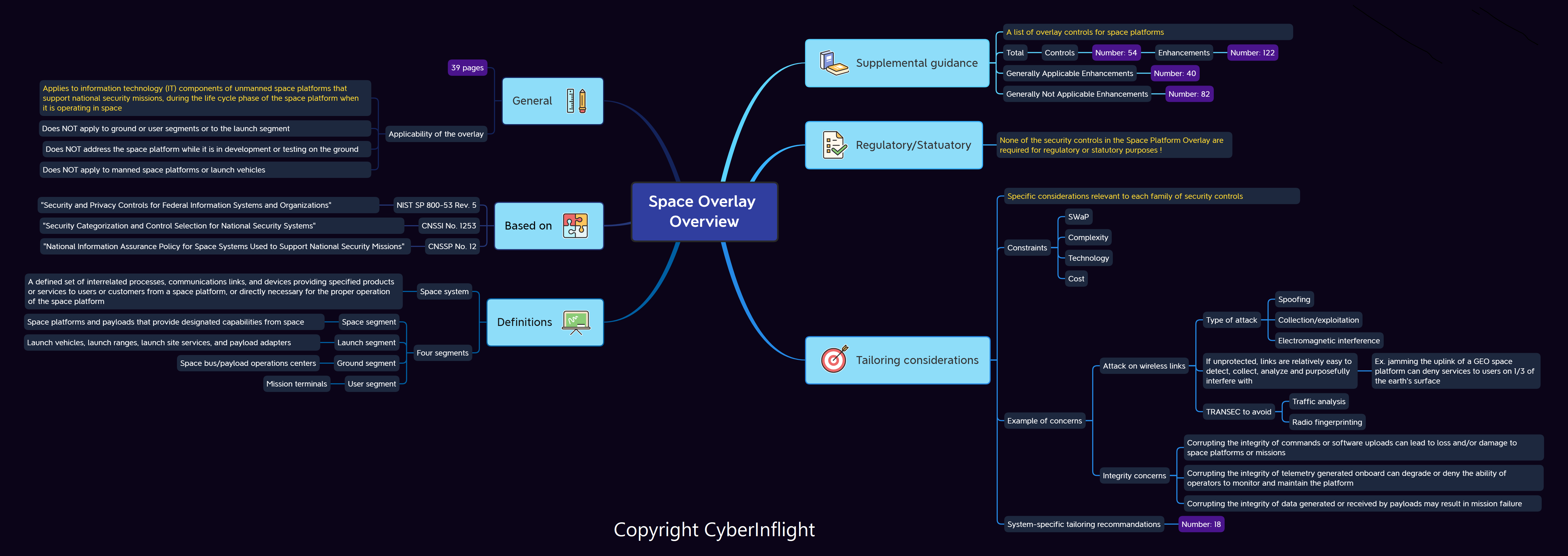
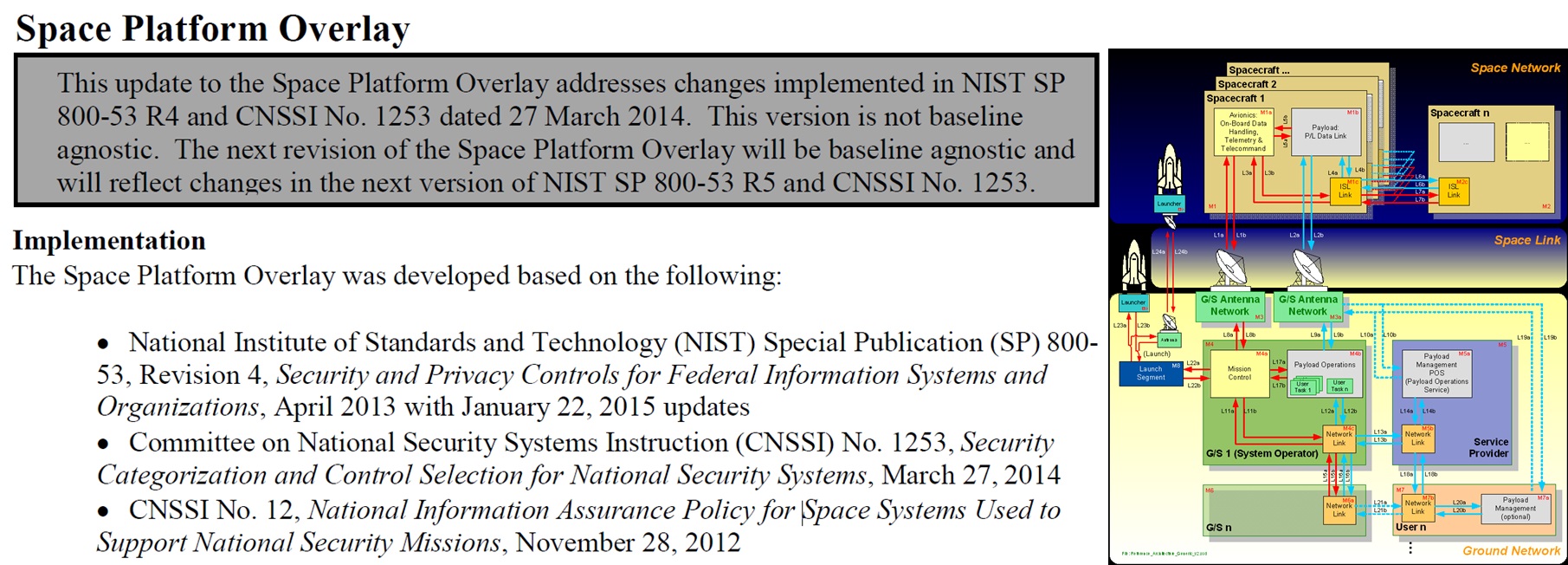
  • (EN) The Space Platform Overlay – Have you heard about Space Platform Overlay ? Government programs and organizations have attempted to take portions of NIST governance documents and apply it to space systems. Space Platform Overlay takes the existing control sets (such as the CNSSI No. 1253 and the NIST 800-53 Rev. 5) and articulates what could be applicable to the spacecraft.
  • (EN) EUSPA, the new EU Agency for the Space Programme – The adoption of the Regulation establishing the new EU Space Programme on April 27 marks a new beginning for the EU Space Programme and for the European GNSS Agency (GSA), which has now officially evolved into EUSPA, with an expanded mandate and new responsibilities.
  • (EN) It’s official: EUSPA – EU Agency for the Space Programme is here (Video) – EUSPA provides safe and performant space services, enabling synergies, EU innovation, sustainability, and security. Under the EU Space Regulation, EUSPA’s mandate includes EU Space Programme security accreditation.
  • (EN) EUSPA: We are hiring – The Security Department is loooking for Security Risk Engineer, Service Facilities Security Engineer, Service Security Engineer

Papers

Videos

Webinars

  • (EN) June 16, 2021 : Space Resilience for Automakers – Space ISAC and the Center for Automotive Research (@cargroup) are putting on a webinar on Space Resilience for Automakers on 16 June at 12 MDT!
  • (EN) June 1, 2021 : Reducing Space Threats: A Resolution, Volume 2 – In response to UN Resolution 75/36, UN Member States and other key stakeholders were invited to submit their views on threats to space sustainability, what could be norms of behaviour, and how the multilateral community should move forward.

Past Events

  • (EN) May 25 – 28, 2021 : CyCon 2021, the 13th International Conference on Cyber Conflict – Adapting to the new reality, CyCon 2021 will provide a virtual meeting point for decision-makers, opinion-leaders, law and technology experts from the governments, military, academia and industry. CyCon is organised by the NATO Cooperative Cyber Defence Centre of Excellence (CCDCOE)
  • (EN) « Cyber, Space, Cubed » panel at the CyCon2021 – Erin M. Miller (Executive Director, Space ISAC) and Ryan Speelman (Principal director for the Cyber Security Subdivision at the Aerospace Corporation)  hold a session at CyCon 2021 for the « Cyber, Space, Cubed » panel.
  • (EN) James Pavur at the CyCon2021 – James Pavur hold a session by presenting his new paper « On Small Satellites, Big Rockets, and Cyber Trust », as part of a panel NATO Cooperative Cyber Defence Centre of Excellence (CCDCOE)’s CyCon2021 conference. Definitely check it out if you’re interested in launch vehicle and CubeSat cyber security.

Upcoming Events

  • (EN) September 1 – 3, 2021 : Geopolitics and Global Futures Symposium 2021. The 2021 Geopolitics and Global Futures Symposium is now open for applications! Module 1 is about « The Future of Outer Space Security »
  • (EN) October 5 – 7, 2021 : CyberSatGov – To bring together the satellite community with the government and military markets to have a comprehensive, progressive discussion about cybersecurity.
  • (EN) October 19 – 21, 2021 : 11th IAASS conference : Managing Risk in Space – The 11th IAASS Conference “Managing Risk in Space”, organized in cooperation with the Japan Aerospace Exploration Agency (JAXA) is an invitation to reflect and exchange information on a number of space safety and sustainability topics of national and international interest.
  • (EN) October 25-29, 2021 : IAF’s IAC 21 in Dubaï – 72nd International Astronautical Congress 2021 (Dubai, United Arab Emirates) will have two security sessions :
    • D5 is 54th IAA Symposium on Safety, Quality and Knowledge Management in Space Activities (D5.4 will be more technical : Cybersecurity in space systems, risks and countermeasures)
    • E9 is IAF Symposium on Space Security (E9.2 is more strategic and legal focused : Cyber-based security threats to space missions – establishing the legal, institutional and collaborative framework to counteract them)
    • Papers have been selected and the program will be published shortly

This work is not exhaustive, so comments and observations are welcome.
Space Cyber Security Watch N°2 – 17 May 2021

0

PDF VERSION AVALAIBLE HERE

Find below the Space Cyber Security Watch No 2. In this paper, you will find everything that has caught our attention since the last time : news, articles, papers, Space CTI, videos, webinars, events, attacks, podcats …

This work is not exhaustive, so comments and observations are welcome.
Contents

List of new Articles

January 2021

February 2021

April 2021

May 2021

Some good Papers

  • (EN) Space Threat Assessment 2021 (Aerospace Security). The purpose of this annual report from the CSIS Aerospace Security Project is to aggregate and analyze publicly available information on the counterspace capabilities of other nations, primarily China, Russia, Iran, North Korea, and India
  • (EN) Mitigating Cyber Security Risk in Satellite Ground Systems. Satellite ground systems represent an often neglected aspect of cyber security when dis-cussing Air Force and Department of Defense cyber vulnerabilities. An increasing amount of cyber security research and attacks focus on space ground systems in the form of satellite control, satellite communications terminal hacking, and GPS spoofing. Public evidence exists demonstrating nation-state adversary willingness and intent for attacking these systems.

Webinars and past events to review

Upcoming Events

Past Events

  • (EN) May 10 – 12, 2021 : CyberSatDigital – How to identify bad actors, neutralize risks, and thwart threats on our assets in the satellite ecosystem.

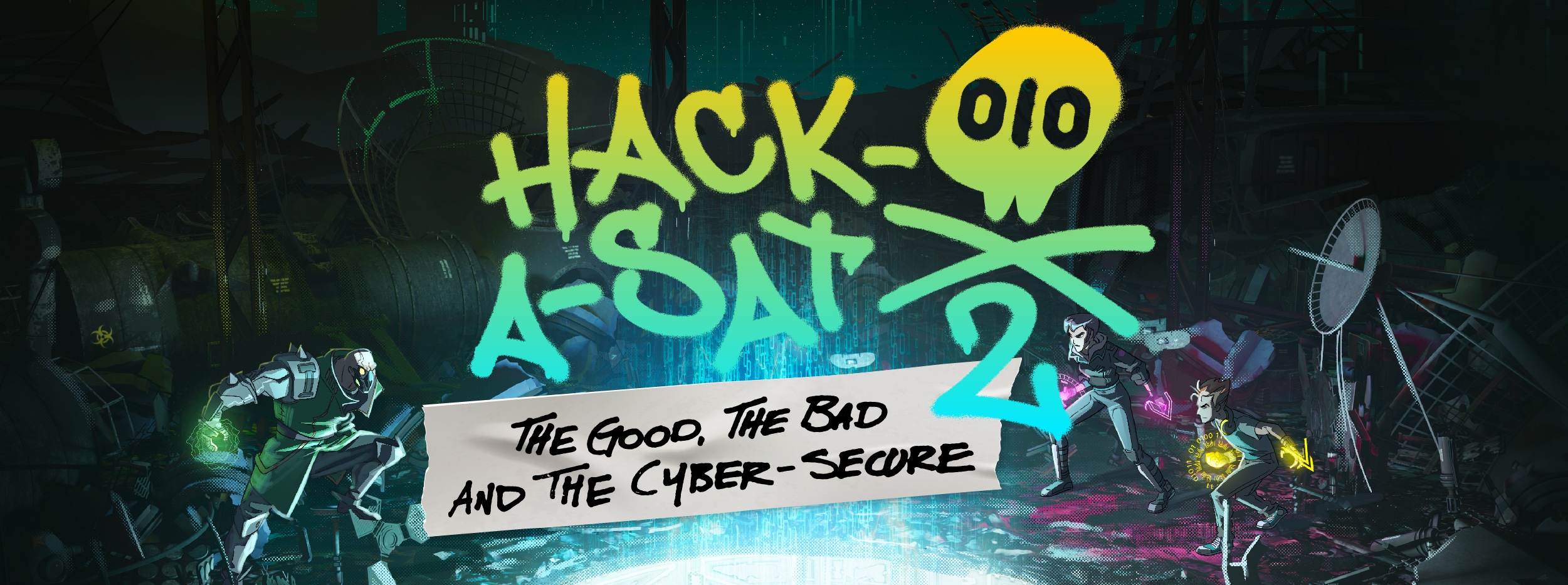
Hack-a-Sat 2 is back avec toujours un challenge pour hacker un satellite américain en orbite

0

L’US Air Force et l’US Space Force lancent conjointement en collaboration avec une communauté des chercheurs en sécurité, l’édition 2021 du programme Hack-A-Sat.

Hack-A-Sat 2 se présentera, comme la première édition de Hack-A-Sat, sous la forme d’un programme de bug bounty et d’un CTF (Captur The Flag) dont l’objectif sera de pirater un vrai satellite en orbite au-dessus de la Terre.

Les inscriptions pour le tour de qualification de ce deuxième « Satellites Space Security Challenge » sont dores-et-déjà ouvertes depuis le 4 mai 2021.

Comme l’année dernière, cette compétition se fera en édition virtuelle à distance. Elle permettra aux chercheurs en sécurité de tous niveaux de mesurer leurs compétences et leur créativité sur la résolution de défis de cybersécurité appliqués à des systèmes spatiaux.

Hack-A-Sat 2 commence par un événement de qualification qui a lieu du 26 juin, 10 heures EDT au 27 juin, 16 heures EDT. Les équipes s’affronteront dans un format de type Jeopardy, en gagnant des points en fonction de leur vitesse et de leur précision dans la résolution des challenges.

Les huit meilleures équipes de la phase de qualification se qualifieront pour la phase finale de Hack-A-Sat 2. Il s’agira cette fois d’une épreuve d’attaque et de défense de type « Captur The Flag » (CTF), dans laquelle les 8 équipes défendront leur système satellitaire tout en utilisant des mesures offensives sur les systèmes de leurs adversaires.

Cette phase finale se déroulera du 17 septembre, 18 heures EDT, au 19 septembre, 18 heures EDT. Elle nécessitera des connaissances techniques plus avancées sur les systèmes spatiaux. Les trois meilleures équipes recevront 50 000 dollars pour la première place, 30 000 dollars pour la deuxième place et 20 000 dollars pour la troisième place.

L’année dernière, Hack-A-Sat 1, le premier Space Security Challenge, avait attiré plus de 2 000 équipes composées de plus de 6 000 personnes, qui ont pu se connecter, apprendre et développer leurs compétences dans le cadre de ce concours unique en son genre, entièrement immersif. Lors de la phase finale, les meilleures équipes avait dû relever un challenge sur un vrai satellite en orbite, une première dans l’histoire.

Alors que les satellites fournissent au monde entier les données nécessaires à la transmission de capacités telles que le GPS ou les transactions par carte de crédit, les départements US de l’armée de l’air et de l’espace reconnaissent les avantages du hacking éthique (ethical hacking) pour faire progresser la cybersécurité dans le domaine du spatiale.

« La sécurité et la cyber-résilience de nos systèmes en orbite sont une nécessité absolue pour assurer le développement pacifique du patrimoine spatial mondial au cours des prochaines décennies », a déclaré le lieutenant-général John F. Thompson, commandant du Space and Missile Systems Center de l’US Space Force. « Cela nécessite une multitude de spécialités, de sorte que les partenariats dans l’ensemble du spectre professionnel de la cybersécurité sont essentiels pour développer la prochaine génération de systèmes spatiaux sécurisés. »

L’inscription à l’événement qualificatif de hack-a-sat 2 est ouverte au public. Pour s’inscrire, connaître les règles et les conditions d’admissibilité, ou s’inscrire simplement pour rester informé de toutes les mises à jour du concours, rendez vous sur le site hackasat.com.

Les start-ups et PME spatiales s’allient pour positionner la filière NewSpace française en leader mondial

0

Une nouvelle alliance française dans le newspace vient de se créer. Alliance NewSpace France fait l’annonce de sa création ci-dessous. Il s’agit d’une initiative lancée par une vingtaine de PME et start-ups spatiales françaises, pour faire rayonner la filière dans le monde entier et créer des leaders du secteur spatial de demain. L’Alliance est ouverte à tous les acteurs du NewSpace.

Les entreprises françaises du NewSpace se réunissent sous la bannière de l’Alliance NewSpace France pour atteindre une masse critique afin de faire rayonner l’incroyable dynamique des start-ups spatiales françaises.

Arrivée d’acteurs privés, accélération, innovations, nouvelles technologies, nouvelles applications, nouveaux acteurs : le secteur spatial est aujourd’hui en profonde mutation. Cette révolution, appelée “NewSpace” est portée par des start-ups, entreprises, laboratoires et organisations diverses dans le monde entier.

La mission de l’Alliance NewSpace France est de fédérer l’ensemble des acteurs de la filière NewSpace sur le territoire Français pour faire rayonner au niveau national et mondial son savoir-faire.

« En France, nous portons des innovations majeures sur l’intégralité du secteur spatial, avec toute la chaîne de valeur du satellite, allant du lancement au traitement des données, en passant par son lancement, et même du tourisme spatial », explique Stanislas Maximin, Président de la nouvelle Alliance.

Des objectifs ambitieux pour permettre à la France de rester sur le devant de la scène

L’Alliance NewSpace représente une vingtaine de membres, plus de 700 employés et plusieurs dizaines de millions d’euros d’investissement en 2020. Elle renforce le positionnement des acteurs de la filière en améliorant leur visibilité, en renforçant l’investissement, en favorisant les co-développements, en saisissant les opportunités d’affaires à l’international. Sa mission : défendre les valeurs, les besoins et les attentes de la filière en France et en Europe.

La France dispose d’un terreau institutionnel et industriel fertile, la positionnant au cœur de l’écosystème aérospatial mondial. Cependant, son avenir dépend des nouvelles initiatives qui émergent et se développent très rapidement.

« Le NewSpace est synonyme d’agilité pour répondre au plus vite à un marché dynamique en pleine mutation. Une coopération ouverte au niveau français est sans conteste un facteur de succès pour faire face à une compétition mondiale qui se renforce. Cette initiative propose une approche constructive face à cet enjeu. » note Giao-Minh Nguyen, Vice-Président de l’Alliance.

Porter une vision transverse du secteur centrée sur la coopération

Si la participation et le support déjà existant des institutions et du gouvernement sont nécessaires au bon développement de la filière, Stanislas Maximin précise :

« Nous sommes convaincus que l’innovation doit être au service des marchés, des besoins et de la vision des entreprises. Elle doit émaner des acteurs qui prennent les risques et qui innovent. Ainsi, l’Alliance se veut être une plateforme fertile pour encourager les interactions, les projets et les idées entre les entreprises du NewSpace. »

Objectif : mettre en commun les besoins et les attentes, faciliter le développement de projets dans la filière, se diversifier et attaquer de nouveaux marchés internationaux.

Stanislas Maximin (Venture Orbital), Président

Pour en savoir plus : Compte Twitter de l’Alliance NewSpace France

Space Cyber Security Watch N°1 – 3 May 2021

0

PDF VERSION AVALAIBLE HERE

Find below the first Space Cyber Security Watch of the Space Cyber Security Community. In this paper, you will find everything that has caught our attention since the last time : news, articles, papers, Space CTI, videos, webinars, events, attacks, podcats …

For this first Space and Cyber Security Watch, we catch up on the news since the beginning of the year.

I would like to thank Coreteam members of the Space Cyber Security Community for their help in this work (Stephane, Teodor, Yohann, Florent, Julien)

This work is not exhaustive. So comments and observations are welcome.
Contents

News of the latest Attacks on Space Systems

List of new Articles

January 2021

February 2021

March 2021

April 2021

CYSAT’21

Space ISAC (Space Information Sharing and Analysis Center)

SPD-5 : National Space Policy Directive 5 aka « Cybersecurity Principles for Space Systems »

(EN) On September 4, 2020, U.S. President Donald Trump issued Space Policy Directive 5 (SPD-5), known as the « Cybersecurity Principles for Space Systems », on the cybersecurity of space systems and their supporting infrastructure

(FR) Le 4 septembre 2020, le Président des États-Unis Donald Trump a promulgué la Space Policy Directive 5 (SPD-5) dite « Cybersecurity Principles for Space Systems » relative à la cybersécurité des systèmes spatiaux et de leurs infrastructures de support

AsterX: First french military exercise in space

(EN) France is conducting its first military space exercise to assess its satellite protection and surveillance capabilities in a now militarised space.

(FR) La France mène son premier exercice militaire spatial afin d’évaluer ses capacités de protection de ses satellites et de surveillance dans un espace désormais militarisé.

War in Space

Some good Papers

Videos

Webinars to review

Podcasts

Upcoming Events

  • (EN) Securing Software-Defined Satellites (Wednesday May 5, 2021)
  • (EN) Inaugural Space Cybersecurity Symposium – on May 5, 2021 (Virtual Event) a conference organized by NIST. This event is jointly hosted by the Department of Commerce (DOC) and Department of Homeland Security (DHS)
  • (EN) SpaceOps 2021 – The 16th international conference on space operations (3-5 May 2021)  will be virtual and free and has a cyber session, with a co-chair from CNES (Centre national d’études spatiales – French national space center)
  • (EN) IAF’s IAC 21 in Dubaï – 72nd International Astronautical Congress 2021 (25-29 October 2021, Dubai, United Arab Emirates) will have two (yes 2!) security sessions :
    • D5 is 54th IAA Symposium on Safety, Quality and Knowledge Management in Space Activities (D5.4 will be more technical : Cybersecurity in space systems, risks and countermeasures)
    • E9 is IAF Symposium on Space Security (E9.2 is more strategic and legal focused : Cyber-based security threats to space missions – establishing the legal, institutional and collaborative framework to counteract them)
    • Papers have been selected and the program will be published shortly

CYSAT ’21, a space cybersecurity conference : Full Keynotes and Presentations

0

CYSAT ’21 est la première conférence en Europe, consacrée à la cybersécurité des satellites et de l’industrie spatiale. Elle a eu lieu du 17 au 19 mars 2021 et a réuni les principaux acteurs de l’industrie spatiale européenne pour partager les défis et les solutions liés aux cyber-risques et à la cyber-sécurité dans l’espace.

Vous retrouverez ci-dessous l’enregistrement intégral des 3 jours de conférences avec l’ensemble des intervenants. Le programme de la conférence est disponible ici. La liste des intervenants est disponible ici.

CYSAT ’21 – Teaser

CYSAT’21 Opening keynote by Elodie Viau (ESA)

CYSAT’21: Massimo Mercati from the European Space Agency (ESA)

CYSAT’21: Patrick Nicolet « How current cybersecurity trends can serve the space industry »

CYSAT’21: Florian Shütz « Switzerland, a leading nation for cybersecurity and space innovation »

CYSAT ’21: Alexandre Karlov « End-to end protection of space assets and data »

CYSAT ’21: Giovanni Pandolfi « Exploiting cybersecurity from the ground (segment) up »

CYSAT ’21: Enrique Fraga Moreira « Keeping the cloud securely attached to the ground (segment) »

CYSAT ’21: Adrien Bécue « The role of quantum technologies in secure communications »

CYSAT ’21: Akash Patel « Democratizing and reliability of data & AI solutions in space »

CYSAT ’21: S. Linden & C. Rückriegel « Security considerations for ground segment cloud platforms »

CYSAT ’21: James Pavur « Adventures in VSAT hacking: lessons for space security »

CYSAT ’21: Vincent Lenders « Secure and fast satellite broadband »

CYSAT ’21: Julien Airaud, « Overview of cybersecurity integration »

A propos de CYSEC

CYSEC est une société de cybersécurité basée au Parc de l’innovation de l’EPFL à Lausanne, en Suisse qui combine une connaissance approfondie de la sécurité et une vaste expérience de l’industrie.

Les équipes de CYSEC sont composées de cryptographes, de spécialistes de la sécurité logicielle et d’ingénieurs en matériel. CYSEC est une société qui peut fournir des solutions de sécurité agiles pour les infrastructures informatiques les plus complexes dans le monde entier et qui est prête à relever le nouveau défi de la cybersécurité.

CYSEC permet à ses clients de bénéficier d’un tout nouveau niveau de flexibilité et d’agilité qui change la donne aujourd’hui, compte tenu de l’évolution rapide des besoins en matière de cybersécurité. Pour plus d’informations, veuillez consulter le site www.cysec.com/space

A propos d’AP-Swiss

AP-Swiss est la plate-forme « Ambassadeursé du programmes d’applications ARTES de l’Agence spatiale européenne en Suisse. Il s’agit d’un partenariat entre l’Agence spatiale européenne (ESA) et le Secrétariat d’État à l’éducation, à la recherche et à l’innovation (SERI) de la Confédération suisse. AP-Swiss soutient également ESA BIC Switzerland, le centre d’incubation d’entreprises de l’ESA en Suisse. Pour plus d’informations, veuillez consulter le site www.ap-swiss.ch

CYSAT’21, le 1er événement européen consacré à la cybersécurité de l’industrie spatiale

0

CYSEC, une entreprise suisse spécialisée dans la cybersécurité, co-organise avec AP-Swiss, la plateforme « Ambassadeurs » du programme d’applications de l’Agence Spatiale Européenne (ESA) en Suisse, l’événement CYSAT’21, la première conférence en Europe, consacrée à la cybersécurité des satellites et de l’industrie spatiale.

Un événement entièrement virtuel et en ligne

CYSAT ’21 devait réunir à Davos, en Suisse, du 17 au 19 mars 2021, les principaux acteurs de l’industrie spatiale européenne pour partager les défis et les solutions liés aux cyber-risques et à la cyber-sécurité dans l’espace.

Suite à la crise sanitaire et la poursuivre de la pandémie, l’événement passe entièrement en virtuel et en ligne. Les participants pourront suivre très confortablement les présentations et les discussions en panel via un flux diffusé en direct. La mise en réseau se fera grâce à la plateforme b2match.

Teaser CYSAT’21

Pourquoi un tel événement ?

Pendant des années, les ingénieurs de l’aérospatiale se sont consacrés essentiellement à la construction de satellites fiables, souvent au détriment de la sécurité.

Avec un accès de plus en plus facile à l’espace et l’essor des nouveaux services via l’espace qui collectent par exemple des données, les actifs spatiaux deviennent des cibles attrayantes pour les pirates.

Le moment est venu de construire un écosystème européen capable de répondre aux défis actuels et futurs de la sécurisation de ces actifs stratégiques, des données et des services depuis l’espace afin de garantir leur sécurité et que chaque pays puisse préserver sa souveraineté.

La CYSEC, en partenariat avec AP-Swiss, a souhaité apporter à la communauté spatiale européenne la possibilité d’apprendre, de partager et de se connecter sur le thème de la cybersécurité en réunissant des spécialistes du domaine, des pirates éthiques et des experts, le tout au sein d’un événement d’une durée de trois jours.

Informations pratiques

  • Le programme de la conférence est disponible ici.
  • La liste des intervenants est disponible ici.
  • L’enregistrement en ligne se fait ici.
  • Plus d’information sur le site de l’événement cysat.eu

A propos de CYSEC

CYSEC est une société de cybersécurité basée au Parc de l’innovation de l’EPFL à Lausanne, en Suisse qui combine une connaissance approfondie de la sécurité et une vaste expérience de l’industrie.

Les équipes de CYSEC sont composées de cryptographes, de spécialistes de la sécurité logicielle et d’ingénieurs en matériel. CYSEC est une société qui peut fournir des solutions de sécurité agiles pour les infrastructures informatiques les plus complexes dans le monde entier et qui est prête à relever le nouveau défi de la cybersécurité.

CYSEC permet à ses clients de bénéficier d’un tout nouveau niveau de flexibilité et d’agilité qui change la donne aujourd’hui, compte tenu de l’évolution rapide des besoins en matière de cybersécurité. Pour plus d’informations, veuillez consulter le site www.cysec.com/space

A propos d’AP-Swiss

AP-Swiss est la plate-forme « Ambassadeursé du programmes d’applications ARTES de l’Agence spatiale européenne en Suisse. Il s’agit d’un partenariat entre l’Agence spatiale européenne (ESA) et le Secrétariat d’État à l’éducation, à la recherche et à l’innovation (SERI) de la Confédération suisse. AP-Swiss soutient également ESA BIC Switzerland, le centre d’incubation d’entreprises de l’ESA en Suisse. Pour plus d’informations, veuillez consulter le site www.ap-swiss.ch

Hack-A-Sat avec NoLimitSecu (podcast)

1

Le dernier numéro de NoLimitSecu revient sur la compétition « Hack-a-Sat« , un programme de bug bounty de l’armée de l’air américaine (US Air Force) sous la forme d’un CTF (Captur The Flag) dont l’objectif était de pirater un vrai satellite en orbite au-dessus de la Terre.

Durant les épreuves qualitatives, il s’agissait d’attaquer un véritable satellite en orbite et d’y repérer des bugs et des failles que l’ennemi pourrait exploiter.

Seules les 10 meilleures équipes ont été qualifiées pour l’épreuve finale qui s’est déroulée lors de la conférence Defcon 2020 à Las Vegas au mois d’août. Le challenge de l’épreuve finale a été révélé. Outre le fait que les hackers devaient attaquer un vrai satellite, ils devaient également tenter de pirater sa caméra et de prendre une photo de la Lune comme preuve (le fameux « flag »). Les trois premières équipes ont reçu des prix allant de 20.000 à 50.000 dollars.

Avec la Pandémie de Coronavirus actuelle qui se poursuit, les organisateurs ont organisé l’épreuve finale à distance. Parmi eux, des français ont été retenus et ils racontent leur expérience dans le podcast de NoLimitSecu ci-dessous :

Épisode #292 : la compétition Hack-A-Sat, avec Nicolas Iooss et Aris Adamantiadis de l’équipe Solar Wine

Podcast: Play in new window | Download

Participez au challenge DG’hAck, un CTF organisé par la DGA

0

Vous êtes étudiant, professionnel ou simplement passionné en cybersécurité et vous aimez les défis ? Participez au challenge #DGhAck organisé par la DGA, la Direction Générale de l’Armement.

Il s’agit d’un challenge sous la forme d’un CTF (Capture The Flag) qui se tiendra du 12 au 27 novembre 2020. Au programme : rétroingénierie, cryptographie, exploitation, investigation numérique…

S’ils le souhaitent et s’ils remplissent certaines conditions*, les joueurs les mieux classés se verront offrir un entretien de sélection pour un stage de fin d’étude ou un emploi en CDI à DGA Maîtrise de l’information à Bruz en Bretagne, sans passer par une pré-sélection sur épreuve technique.

Prêt à relever le défi ? Alors inscrivez-vous sur www.dghack.fr à partir du 12 novembre !

Vous pouvez également consulter les offres d’emplois et de stages en cybersécurité à DGA Maîtrise de l’information sur cette page :

https://www.defense.gouv.fr/dga/recrutement2/recrutement-cyberdefense

* Les candidats retenus pour les postes et les stages nécessitant d’accéder à des informations relevant du secret de la défense nationale, feront l’objet d’une procédure d’habilitation, au niveau Secret Défense, conformément aux dispositions des articles R.2311-1 et suivants du Code de la défense et de l’IGI 1300/SGDSN/PSE du 30 novembre 2011.

Derniers articles

2nd International Conference on Gravitation, Astrophysics and Cosmology (ICGAC2026) – April 16-18, 2026 in...

0
We are pleased to announce that the 2nd International Conference on Gravitation, Astrophysics and Cosmology (ICGAC2026) will be held on April 16-18, 2026, in...

Two big announcements : the release of SPARTA v3.1 with MITRE’s EMB3D mapping and...

0
In the following article, discover the major advancements announced with the release of SPARTA v3.1: the addition of new NIST space segment guidance, the...

An analysis of the Thales satellite hacking demo at CYSAT 2023 with the METEORSTORM™...

0
Disclaimer Please be informed that the analysis detailed in this article is entirely separate from the hacking experiment conducted by the Thales team on the...

Exploring the power of the METEORSTORM™ framework — a framework built for full-spectrum modeling...

1
I'm very proud to have successfully taken up a new challenge exam in beta version about METEORSTORM™ framework which allowed me to obtain the...

An analysis of the Thales satellite hacking demo at CYSAT 2023 with the MITRE...

1
Disclaimer Please be informed that the analysis detailed in this article is entirely separate from the hacking experiment conducted by the Thales team on the...

Articles les plus lus

Cartographie des acteurs étatiques du cyber en France

0
Avec l'aimable autorisation de Martial Le Guédard, nous reproduisons ci-dessous sa cartographie au sujet des différents acteurs étatiques évoluant dans le domaine du Cyber...

Cartographie des services spécialisés de la communauté du renseignement (1er et 2ème cercle)

0
L'illustration ci-dessous est une carte heuristique qui présente les services spécialisés de la communauté du renseignement du 1er cercle. Cette cartographie est mise à...

Qu’est-ce que le grand Commandement De l’Espace (CDE) créé par la France pour la...

2
Le Commandement De l’Espace (CDE) a été créé par arrêté le 3 septembre 2019. Il succède au Commandement interarmées de l’espace (CIE). Il rassemble...

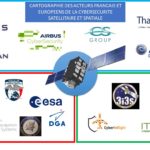
Cartographie des acteurs français et européens de la cybersécurité satellitaire et spatiale

1
La France est leader de la politique spatiale en Europe. Elle met en oeuvre des projets innovants et performants avec en permanence de nouveaux...

Etude sur la cybersécurité des systèmes spatiaux : menaces, vulnérabilités et risques

4
A la différence des attaques électroniques qui interférent avec la transmission des signaux de Radio Fréquence, les cyberattaques visent quant à elles, les données...

Popular posts

Cartographie des acteurs étatiques du cyber en France

0
Avec l'aimable autorisation de Martial Le Guédard, nous reproduisons ci-dessous sa cartographie au sujet des différents acteurs étatiques évoluant dans le domaine du Cyber...

Cartographie des services spécialisés de la communauté du renseignement (1er et 2ème cercle)

0
L'illustration ci-dessous est une carte heuristique qui présente les services spécialisés de la communauté du renseignement du 1er cercle. Cette cartographie est mise à...

Qu’est-ce que le grand Commandement De l’Espace (CDE) créé par la France pour la...

2
Le Commandement De l’Espace (CDE) a été créé par arrêté le 3 septembre 2019. Il succède au Commandement interarmées de l’espace (CIE). Il rassemble...

Cartographie des acteurs français et européens de la cybersécurité satellitaire et spatiale

1
La France est leader de la politique spatiale en Europe. Elle met en oeuvre des projets innovants et performants avec en permanence de nouveaux...

Etude sur la cybersécurité des systèmes spatiaux : menaces, vulnérabilités et risques

4
A la différence des attaques électroniques qui interférent avec la transmission des signaux de Radio Fréquence, les cyberattaques visent quant à elles, les données...